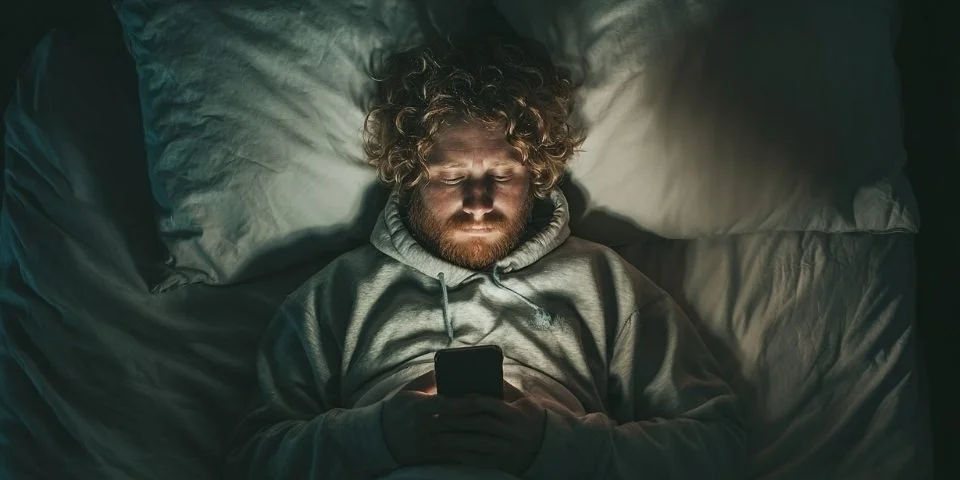
This AI image was made using author’s personal photography and Midjourney v.7
NOTE: As of 03/17/2026, this is an unpublished blog sample I provided to the board of Queer Men United 501c3 used on this site with permission from the founder of the organization.
Picture it. America. 2026...
There’s a supercomputer in every pocket. It’s an era when human beings are more connected than ever before. On the surface, you’d think it would be easy to find like-minded people with just the tap of a button, people who accept us for our authentic selves even if we’re imperfect, uncertain, and more than a little lonely. But for queer men, especially those of us who live in the south, that couldn’t be further from the truth.
It’s a perplexing paradox.
We are more connected by technology than ever, but many of us are lonelier than we’ve ever been. Even worse, an increasingly hostile political climate is making public queerness more dangerous by the day, which, in turn, makes isolation worse and the need for an in-person community more absolute.
So, what is failing our community? Why are we experiencing abject loneliness in a time of interconnectedness? That’s exactly what we at Arkansas Queer Men’s Social Club wanted to figure out. It’s what we have set out to fix because evidence shows that swipe culture is leaving many of us behind, and that reality is unacceptable.
────────────────────────────────────────
The App Connection Fallacy
Research indicates LGBTQ+ people use dating apps at roughly two times the rate of the general population, and that may come as no surprise.
Dating and hookup apps have become the primary, and sometimes safest way for the queer community to discreetly find like-minded people. Whether you’re looking to find a long- or short-term connection, these apps appear to act as shields from the prying eyes of those who might judge us or seek to do us harm. But when you peel back the flashy profiles and GPS locations, research (and lived experiences) reveal that heavy dating app use is consistently associated with increased loneliness, lower life satisfaction, body dissatisfaction, racial tension, and depressive symptoms. In effect, the very platforms allegedly designed to “connect” us are worsening the very things they are marketed to solve.
And, unsurprisingly, the harm isn’t equally applied.
────────────────────────────────────────
Filtering for Bigotry
Did you know that a staggering 99% of sexual minority Black men surveyed in 2022 reported that they have encountered racial discrimination on dating platforms?
While preferences are one thing, the filtering tools built into many hookup apps reflect existing biases. They both systematize these biases and give both bigotry and fetishization a convenient user interface. This directly affects many of the co-cultures within our community.
For example, when important details of a person’s life and identity are whittled down to a check mark on a profile, we lose narrative control and become potentially stigmatized. This is true for those living with HIV, the trans/non-binary community, and even those whose body types can’t be defined in one of five categories. This creates interpersonal tension for those who fear being stigmatized or outright attacked by other users.
And nowhere is this more visible than for our trans brothers, sisters, and those who are non-binary. Whether it’s fetishization, slurs, identity invalidation, or widespread bans of trans profiles, many apps widen the gulfs between us as our stories are consumed by labels. As a result, the digital spaces that should feel like a starting point often make members of our community feel like interlopers in a cis-gendered world.
And for those of us navigating body image issues, which, frankly, is most of us, the picture isn’t much better. Research indicates that more than 33% of gay men (most not overweight by BMI standards) report experiencing fatphobia, and many app users show a significantly higher rate of body dissatisfaction than general populations. To make matters worse, most hookup apps have little variety in body type categories, essentially rendering many larger men linguistically invisible.
────────────────────────────────────────
Substance-Saturated Safe Space
Research consistently shows that LGBTQ+ individuals are 1.5 to 3 times more likely than their heterosexual counterparts to experience substance use disorders, and that this rises when exposure to a substance-saturated experience is the baseline experience for meeting people. According to research, nearly 50% of app-using MSM (men who have sex with men regardless of sexual identity) had been under the influence of alcohol and/or drugs during sex in the past month. Nearly half!
In essence, research reveals that the online app culture isn’t simply uncomfortable to navigate for those who live a life free of illicit substances. It’s much more than that. It is a minefield for those who are most vulnerable, such as our LGBTQ+ youth as well as those who are already trying to manage their relationship with alcohol or drugs.
Frankly, we as queer people deserve more... a lot more.
────────────────────────────────────────
What the Research Recommends
Those who have spent time researching our cultural spaces are not vague about the solution. Across multiple studies, community connectedness is identified as a documented protective factor against minority stress. Furthermore, one study explicitly states that outness is associated with lower likelihood of serious mental illness among LGBTQ+ Southerners (that’s us). The solution is specific and achievable.
We need to create alternative social contexts. We need places where nuance and personal narrative mean something again. We need spaces and activities that exist outside of substance-saturated and algorithm-driven platforms.
This is not an aspirational talking point. This is a legitimate and clinical recommendation.
This is also exactly why our social club exists.
────────────────────────────────────────
What Queer AR is Doing
First, let’s be clear about this. We are not sitting in judgment of social apps or bars and other, similar entertainment venues; we’re not trying to replace them. In fact, we utilize social media and online chat platforms, such as our lively Discord server, as well as include bars in some of our monthly activities. But we’re also offering something that didn’t exist before. A third, fourth, fifth... option. A space where the point isn’t long-term or short-term romance, drinking, performing, or conforming. It’s just being together.
And we know it’s working. We have watched bonds form and friendships develop between people who might never have crossed paths in algorithm-sorted digital spaces. Many have shown up nervous, unsure how to navigate in-person social spaces, and left with plans to come to the next event. We gather. We have fun. We connect the way that people used to do.
Loneliness is a lot more than a buzzword in the LGBTQ+ community. It is real, and it is epidemic. The harms of swipe culture are documented in research and lived experience by many of us. The research points us toward the solution: build community, build it in person, and build it outside of the systems that are exploiting our vulnerabilities. That’s what we’re doing. And if you’ve been thinking about making the switch from social media to social life, we are here with that option.
Join us. Membership is free, and newcomers are always welcome.
────────────────────────────────────────
A Note on Sources and Methodology
Research sources for this blog were located and organized with the assistance of AI (Claude, Anthropic) and independently verified by the author. All links were confirmed active, all sources were reviewed, and all citations were checked for authorship accuracy as of March 2026. This blog is advocacy writing informed by peer-reviewed research; it is not itself a peer-reviewed publication. Readers are encouraged to consult the original sources linked below for exact statistics.
Works Referenced
Caldwell, J. A., Borsa, A., Rogers, B. A., Roemerman, R., & Wright, E. R. (2023). Outness, discrimination, and psychological distress among LGBTQ+ people living in the Southern United States. LGBT Health, 10(3), 237–244. https://doi.org/10.1089/lgbt.2021.0295
Dietzel, C., & Matar, A. (2025). More than just a bad date: Navigating harms on LGBTQ+ dating apps. The Conversation. https://theconversation.com/more-than-just-a-bad-date-navigating-harms-on-lgbtq-dating-apps-252297
Felner, J. K., Wisdom, J. P., Williams, T., Kaestle, C. E., & Geronimus, A. T. (2020). Stress, coping, and context: Examining substance use among LGBTQ young adults with probable substance use disorders. Psychiatric Services, 71(2), 112–120. https://doi.org/10.1176/appi.ps.201900029
Filice, E., Raffoul, A., Meyer, S. B., & Neiterman, E. (2019). The influence of Grindr, a geosocial networking application, on body image in gay, bisexual and other men who have sex with men: An exploratory study. Body Image, 31, 59–70. https://doi.org/10.1016/j.bodyim.2019.08.007
Foster-Gimbel, O., & Engeln, R. (2016). Fat chance! Experiences and expectations of antifat bias in the gay male community. Psychology of Sexual Orientation and Gender Diversity, 3(1), 63–70. https://doi.org/10.1037/sgd0000159
Green, K. E., & Feinstein, B. A. (2012). Substance use in lesbian, gay, and bisexual populations: An update on empirical research and implications for treatment. Psychology of Addictive Behaviors, 26(2), 265–278. https://doi.org/10.1037/a0025424
Griffiths, D. A., & Armstrong, H. (2024). “They were talking to an idea they had about me”: A qualitative analysis of transgender individuals’ experiences using dating apps. Journal of Sex Research, 61(1), 119–132. https://doi.org/10.1080/00224499.2023.2176422
Obarska, K., Szymczak, K., Lewczuk, K., & Gola, M. (2020). Threats to mental health facilitated by dating applications use among men having sex with men. Frontiers in Psychiatry, 11, 584548. https://doi.org/10.3389/fpsyt.2020.584548
Sharabi, L. L., Ou, L., Von Feldt, P. A., & Parsons, T. D. (2025). Dating app use, psychological health, and psychological well-being: A systematic review and quantitative meta-analysis. Computers in Human Behavior, 177, 108879. https://doi.org/10.1016/j.chb.2025.108879
Wade, R. M., & Pear, M. M. (2022a). Online dating and mental health among young sexual minority Black men: Is ethnic identity protective in the face of sexual racism? International Journal of Environmental Research and Public Health, 19(21), 14263. https://doi.org/10.3390/ijerph192114263
Wade, R. M., & Pear, M. M. (2022b). A good app is hard to find: Examining differences in racialized sexual discrimination across online intimate partner-seeking venues. International Journal of Environmental Research and Public Health, 19(14), 8727. https://doi.org/10.3390/ijerph19148727
Warner, M., Gibbs, J., & Blandford, A. (2024). Shifting norms and value conflicts: Exploring the effects of HIV status disclosure fields in sex-social apps. Archives of Sexual Behavior, 53(4), 1575–1589. https://doi.org/10.1007/s10508-023-02801-5
Supplementary Sources
The following sources informed the broader context of this blog but are not directly referenced in the text above:
Coyne, S. M., Weinstein, E., Sheppard, J. A., James, S., Gale, M., Van Alfen, M., Ririe, N., Monson, C., Ashby, S., Weston, A., & Banks, K. (2023). Analysis of social media use, mental health, and gender identity among US youths. JAMA Network Open, 6(7), e2324389. https://doi.org/10.1001/jamanetworkopen.2023.24389
Nath, R., Matthews, D. D., DeChants, J. P., Hobaica, S., Clark, C. M., Taylor, A. B., & Muñoz, G. (2024). 2024 U.S. National Survey on the Mental Health of LGBTQ+ Young People. The Trevor Project. https://www.thetrevorproject.org/survey-2024/
